People considering knee replacement often encounter terms such as total replacement, partial replacement, computer-assisted surgery, and robotic assistance. These descriptions can be confusing when the practical differences are not clearly explained.
The right approach to advanced knee replacement surgery in PCMC depends on the pattern of arthritis, ligament condition, deformity, bone quality, general health, and the surgeon’s assessment not simply on which technology sounds newest.
Total Knee Replacement
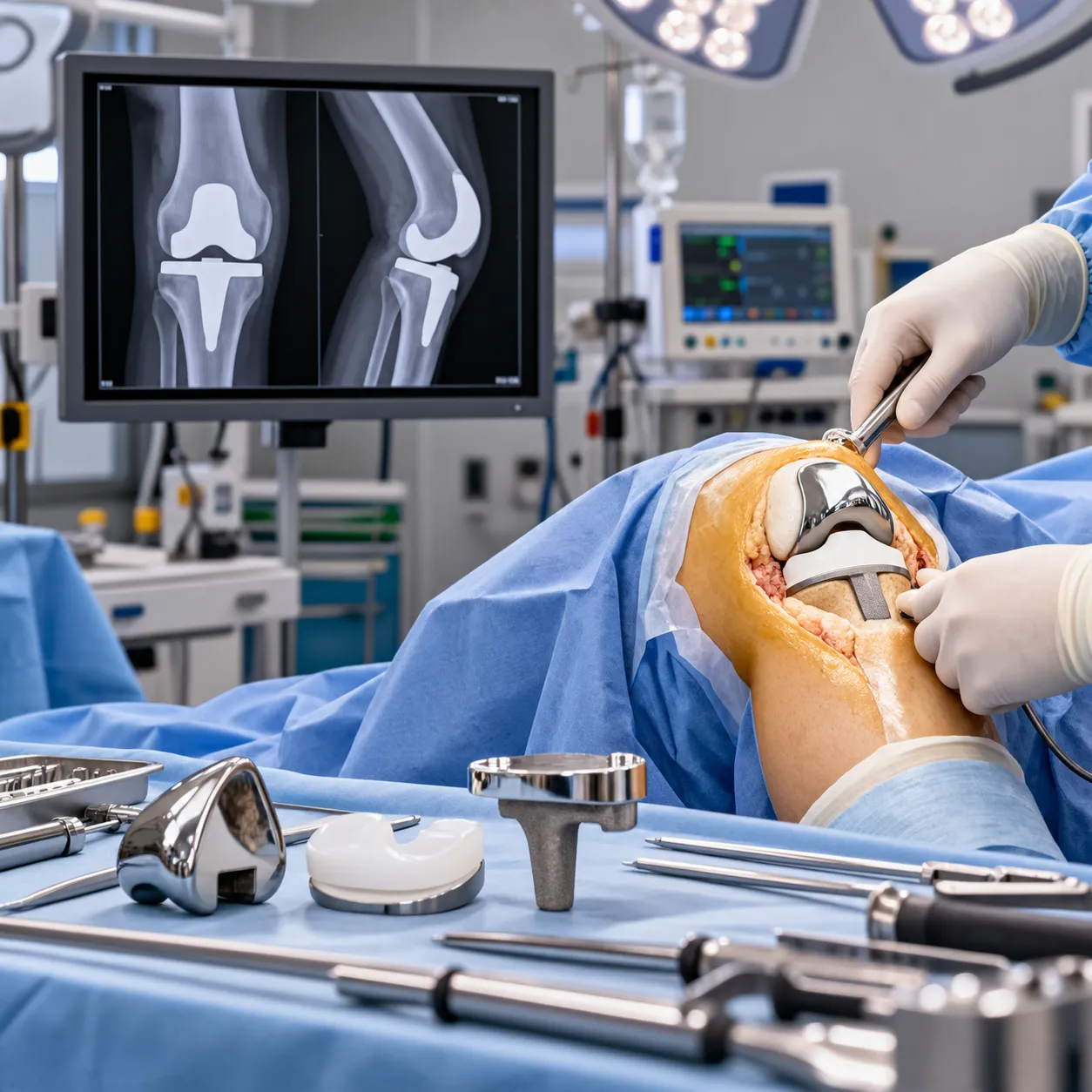
A total knee replacement treats damaged surfaces across the main compartments of the knee. It is commonly considered when arthritis is widespread and causes persistent pain, stiffness, deformity, or major functional restriction.
During surgery, damaged surfaces are prepared and covered with appropriately sized components. A spacer between the components supports smooth movement.
Total replacement may be appropriate when several knee compartments are affected or when deformity and ligament balance cannot be addressed through a limited procedure.
Partial Knee Replacement
Partial or unicompartmental knee replacement treats only the affected section of the knee. It may preserve more natural bone and tissue, but it is suitable only for selected patients.
Potential candidates generally need arthritis confined to a specific compartment, suitable ligament function, and a correctable deformity. If damage is more extensive than expected, total replacement may provide a more predictable solution.
Partial replacement should therefore not be chosen solely because it appears less invasive.
Computer-Assisted and Robotic Techniques
Navigation and robotic-assisted systems may help surgeons plan bone preparation, component position, and alignment. These tools support surgical execution, but they do not independently perform the operation or replace clinical judgment.
Technology is only one part of the outcome. Accurate diagnosis, appropriate patient selection, surgical technique, infection prevention, pain control, and rehabilitation remain essential.
Patients should ask how a proposed system will be used and what benefit is expected in their specific case.
Questions Worth Asking Before Surgery
A productive consultation can include the following questions:
- Is the arthritis limited or widespread?
- Have reasonable non-surgical treatments been tried?
- Why is total or partial replacement recommended?
- How will implant size and alignment be planned?
- What anaesthesia options may be considered?
- When is standing or walking usually started?
- Will a walking aid be needed?
- What are the main risks in my health situation?
- How long might rehabilitation take?
- What activities may be possible after recovery?
Clear answers are more useful than broad promises of a painless or instant recovery.
Preparing for Better Rehabilitation
Before surgery, patients may need medical optimisation, blood tests, imaging, medication review, and infection screening. Diabetes control, smoking cessation, nutrition, and management of skin or dental infections may reduce avoidable risk.
Preparing the home can also help. Loose rugs, slippery bathroom areas, and cluttered walking routes should be addressed. A stable chair, suitable footwear, and arrangements for assistance during the early recovery period may be useful.
Anand Orthopaedic Hospital in Moshi assesses knee arthritis patients from PCMC and the wider Pune area. Treatment recommendations are based on the individual’s symptoms, examination findings, X-rays, medical condition, and expectations.
Advanced systems can assist planning and precision, but they should be discussed within the complete treatment pathway. The most appropriate knee replacement is the one selected for the right patient, performed with sound technique, and supported by structured rehabilitation.
Keywords